Struggling to turn visitors into customers? Your site may be leaking prospects at key moments. Below is a step‑by‑step guide that shows you how to improve website conversion rate, from setting goals to scaling winning experiments.
Step 1: Define Your Conversion Goal and Baseline
First, decide what action you want visitors to take: a purchase, a sign‑up, a quote request, or something else. Write the goal in a single sentence, then set a numeric target. For example, set a goal to increase newsletter sign‑ups among visitors within a defined timeframe.
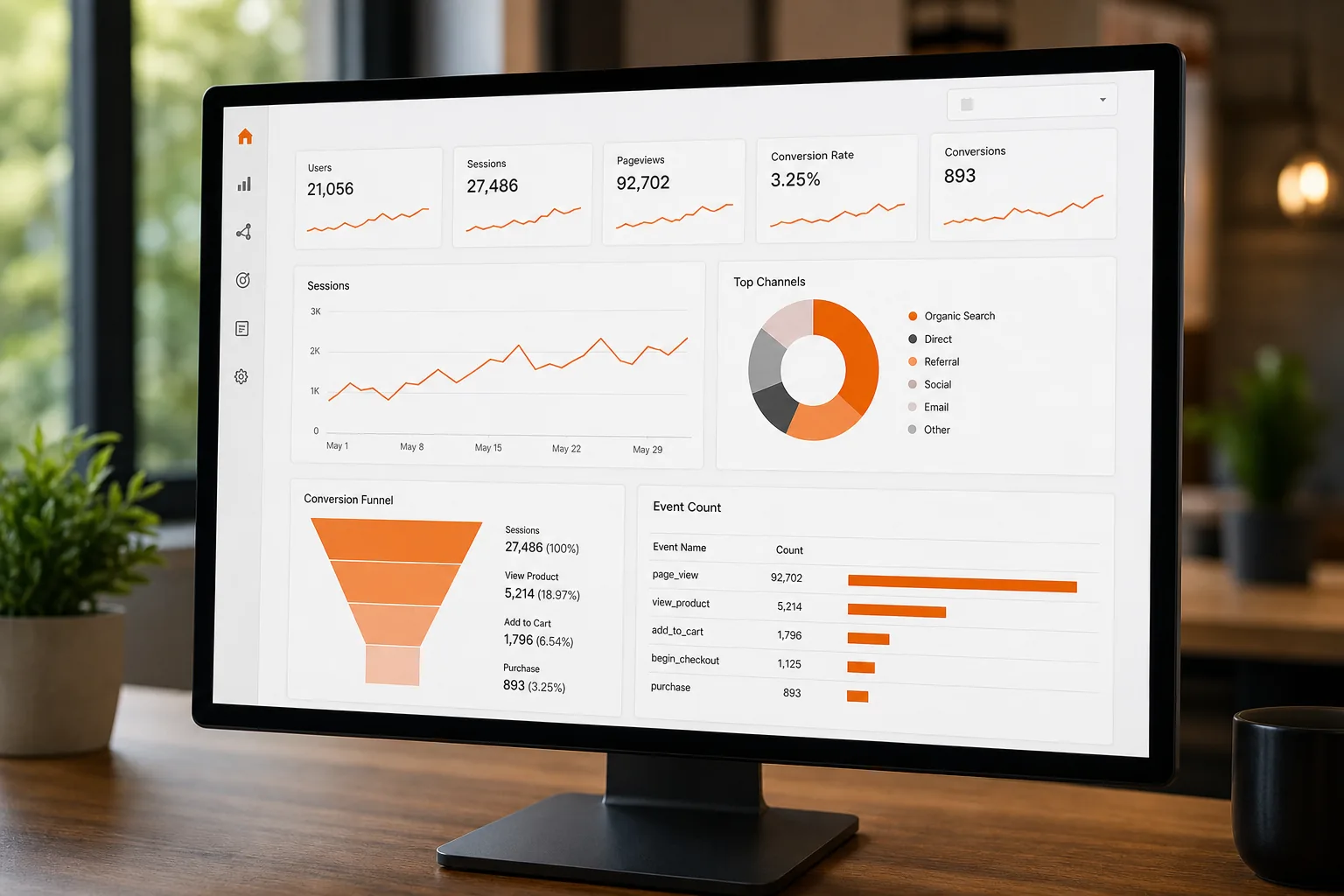
Next, gather baseline data. Use a tool like Google Analytics 4 to track the events that represent that action. Name events consistently so the data stays clean. Look at your current conversion rate, which is simply (conversions ÷ total visitors) × 100 %.
Understanding the baseline gives you a clear starting point and a math‑driven way to forecast revenue. When you know you’re at 2 % now, a 4 % target means you need to double the number of actions while keeping traffic steady.
Tip: Keep the goal realistic. If your industry average is higher than your current rate, a modest bump is more achievable than a dramatic jump.
We at Long Weekend help clients set up this tracking framework as part of our subscription CRO package, so you never have to guess where you stand.
Step 2: Find Where Visitors Drop Off
Once your goal is defined, map the visitor journey. Break the path into discrete steps: landing page, product view, add‑to‑cart, checkout, thank‑you page. Then use funnel reports to see where the biggest exit rates occur.
VWO explains that a sales‑funnel view works like GPS for the customer journey, highlighting the exact spots where prospects “ghost” you. A high exit rate on a pricing page often signals pricing confusion or missing trust signals.
Segment the data by device, source, and audience. You might discover that mobile users abandon at the checkout form, while desktop users drop off on the product description. Those insights let you prioritize fixes that will move the needle the most.
Remember to look at both absolute numbers and percentages. A higher exit rate on a low-traffic page isn’t as urgent as a lower exit rate on a page that sees heavy daily traffic.
Our team can run an audit that surfaces these drop‑off points and delivers a clear backlog of fixes.
Step 3: Improve Your Website’s User Experience and Messaging
The next step is to make the experience smoother and the copy clearer. A clean layout, fast load times, and concise messaging are essential to landing page design that converts customers, reducing friction and building trust.
Start by ensuring the most important information, value proposition, benefits, and CTA, appears above the fold. Use large, readable fonts and a visual hierarchy that guides the eye to the button.
Then audit the copy. Does each headline answer the visitor’s core question? Does the body copy speak directly to the pain points you identified in your persona? Replace vague jargon with plain language that tells the reader exactly what they’ll get.
Don’t forget mobile. Ensure the page works well on smaller screens, and consider image compression or lazy loading to reduce friction.
Pro Tip: Add a short, benefit‑focused subheadline right under the main headline. It reinforces the offer and improves scan‑ability.
Long Weekend’s subscription model includes ongoing design tweaks, so you never have to wait for a big redesign to test a new headline.
Step 4: Reduce Friction in Forms, Checkout, and Calls to Action
Forms and checkout pages are the final gatekeepers. Even a small hurdle can cause a visitor to leave.
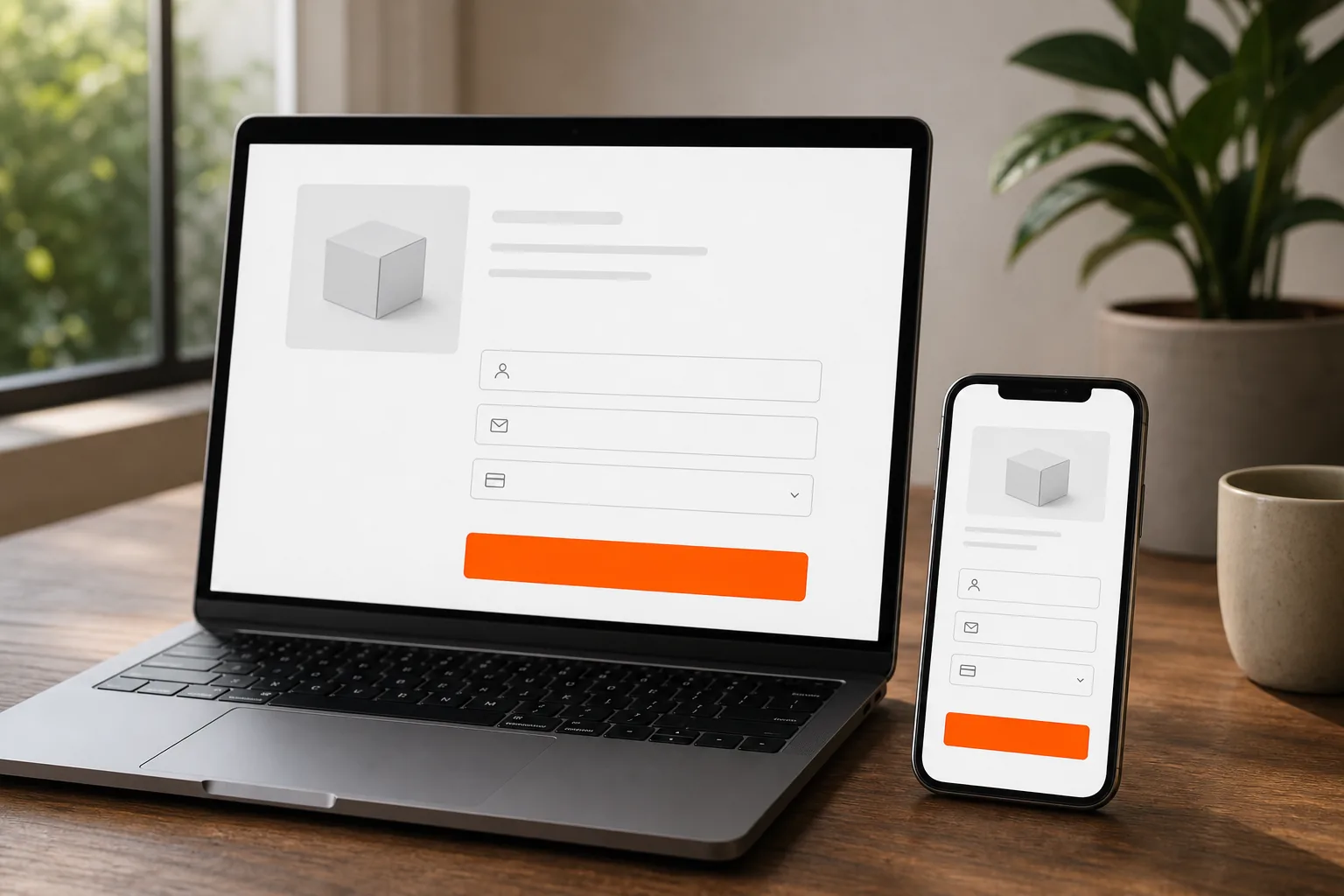
Limit form fields, use inline validation, and display clear security cues.
Apply these tactics:
Show only the fields you truly need. Ask for email, not the full address, until the shipping step.
Use auto‑complete for address fields to speed entry.
Place a visible trust badge or SSL seal next to the payment button.
Make the primary CTA button a contrasting color and use action‑oriented text like "Buy Now".
Test single‑page checkout versus multi‑step flow. For many e‑commerce sites, a single page can lift completion rates by 10, 25 %.
Our CRO specialists at Long Weekend run quick usability tests to spot hidden friction and then implement the fixes without a lengthy development cycle.
Step 5: Test, Measure, and Scale the Changes That Work
Finally, put every change into a controlled experiment. Build a hypothesis that states the observation, the change, the expected lift, and why it should happen.
A solid hypothesis improves clarity because you know exactly what to measure. Set an appropriate statistical confidence threshold and calculate the required sample size before running a test. Read more about A/B testing.
Prioritize tests with the PIE framework: Potential, Importance, Ease. Score each idea, then work on the highest‑scoring backlog first. Typical high‑impact tests include:
Above‑the‑fold “Add to Cart” button color.
Social proof near the CTA.
Guest checkout as the default option.
Run the test for enough time to reach statistical significance. For low‑traffic pages, consider a Bayesian tool that can give early signals without waiting for a fixed sample size.
Key Takeaway: Track each experiment’s lift, document the learning, and roll the winner into the live site before moving to the next idea.
When a test proves successful, scale it across similar pages or product categories. That way you compound gains and keep the conversion rate climbing.
FAQ
What is a good conversion rate for an e‑commerce site?
A good rate varies by industry, and higher-performing sites can generate more revenue with the same traffic.
How long does it take to see results after making CRO changes?
You’ll usually see initial lift within a few weeks once traffic starts flowing to the updated pages, but full impact may take a month or two as users adapt and data stabilizes.
Do I need a developer to implement A/B tests?
Many tools, including VWO and other testing platforms, let you create tests with a visual editor, so you often don’t need deep code changes. For complex checkout flows, a developer may be required.
Should one thing be tested at a time?
Yes. Changing multiple variables in a single test makes it impossible to know which element drove the lift. Stick to single‑variable tests for clear insights.
How often should CRO audits be run?
At least quarterly, or whenever you launch a major campaign, redesign, or see a dip in key metrics. Regular audits keep the funnel healthy.
Can I do CRO on a subscription‑based website?
Absolutely. Track sign‑up flow, onboarding steps, and renewal actions. The same principles of goal definition, drop‑off analysis, and testing apply.
Ready to turn more visitors into customers? Start with a free marketing analysis from Long Weekend, then follow the steps above to build a data‑driven conversion engine.
Conclusion
Pick one high‑impact change, test it rigorously, and scale the winner. Contact Long Weekend for a subscription‑based CRO partnership that handles tracking, design, and testing so you can focus on growth.
Looking for the right digital marketing agency for your business — one that drives measurable ROI? Long Weekend helps service businesses, SaaS, ecommerce brands and more — grow with expert SEO, AI Search, Google Ads (PPC) management, paid social ads, website design, and more.