Restaurant owners, the search engine is the new front‑door. If you aren’t showing up when locals type “pizza near me,” you’re missing a steady stream of tables. Below are the best local SEO subscription services that speak restaurant language and run on a predictable monthly fee.
1. Long Weekend (Our Top Pick) , Full‑service SEO subscription for restaurants
Long Weekend is a Cleveland‑based agency that bundles SEO, PPC, branding, web design, and creative production into one managed subscription. It fits founders, marketing heads, and any eatery that wants a hands‑off growth engine.
We like it because the team claims and fully optimizes your Google Business Profile, cleans up NAP citations, builds location‑specific landing pages, and produces monthly content that keeps your menu fresh in search. The subscription includes regular performance reports, so you can see clicks, calls, and reservation trends without digging through raw data.
Because the service is fully managed, you never touch a spreadsheet. The only thing you need to do is tell us about new dishes or upcoming events, and the team updates everything for you.
One caveat: pricing isn’t listed publicly, so you’ll need a custom quote. That can feel vague, but it also means the plan can be scaled to one‑location bistros or multi‑site chains.
Ready to stop guessing on your marketing spend? Try Long Weekend free →
2. AIOSEO , All‑in‑one local SEO plugin with restaurant schema
AIOSEO is a WordPress plugin that adds a dedicated local SEO module, complete with restaurant schema markup and multi‑location support. It’s built for owners who run their own site but need the technical bits done right.
The plugin pulls your Google Business Profile data into the site, auto‑generates JSON‑LD schema, and keeps NAP details consistent across pages. That eliminates a common source of ranking loss when address info mismatches between your site and directory listings.
It also offers a simple dashboard to manage opening hours, maps, and location pages without writing code. For restaurants with several branches, you can control each location from one screen.
On the downside, AIOSEO requires a WordPress site and a Plus plan or higher to unlock the local module. If you’re on a hosted platform like Squarespace, you’ll need a different solution.
For more on why structured data matters, see AIOSEO’s restaurant SEO guide, which explains how schema helps Google surface your menu and hours.
According to Wikipedia’s definition of local SEO, structured data is a core signal for map‑pack rankings, so AIOSEO’s automation can save you hours of manual work.
3. Thrive Internet Marketing Agency , AI‑driven local SEO for eateries
Thrive offers a monthly, done‑for‑you local SEO service that blends AI‑generated keyword clusters with human‑crafted content. Their platform, Thrive Local, tracks rankings across a geo‑grid, so you see how you rank in every neighborhood you serve.
The agency claims to handle Google Business Profile claims, review monitoring, on‑page optimization, and technical fixes. Their AI tools suggest low‑competition, dish‑level keywords like “wood‑fired pizza downtown Chicago,” which can speed up early wins.
What stands out is the transparent reporting dashboard that pulls data from Google Search Console, Google Maps, and GBP into a single view. You get a monthly snapshot that shows impressions, clicks, and conversion trends.
A possible drawback is that the service leans heavily on AI recommendations, so you might need a knowledgeable point person to approve content before it goes live.
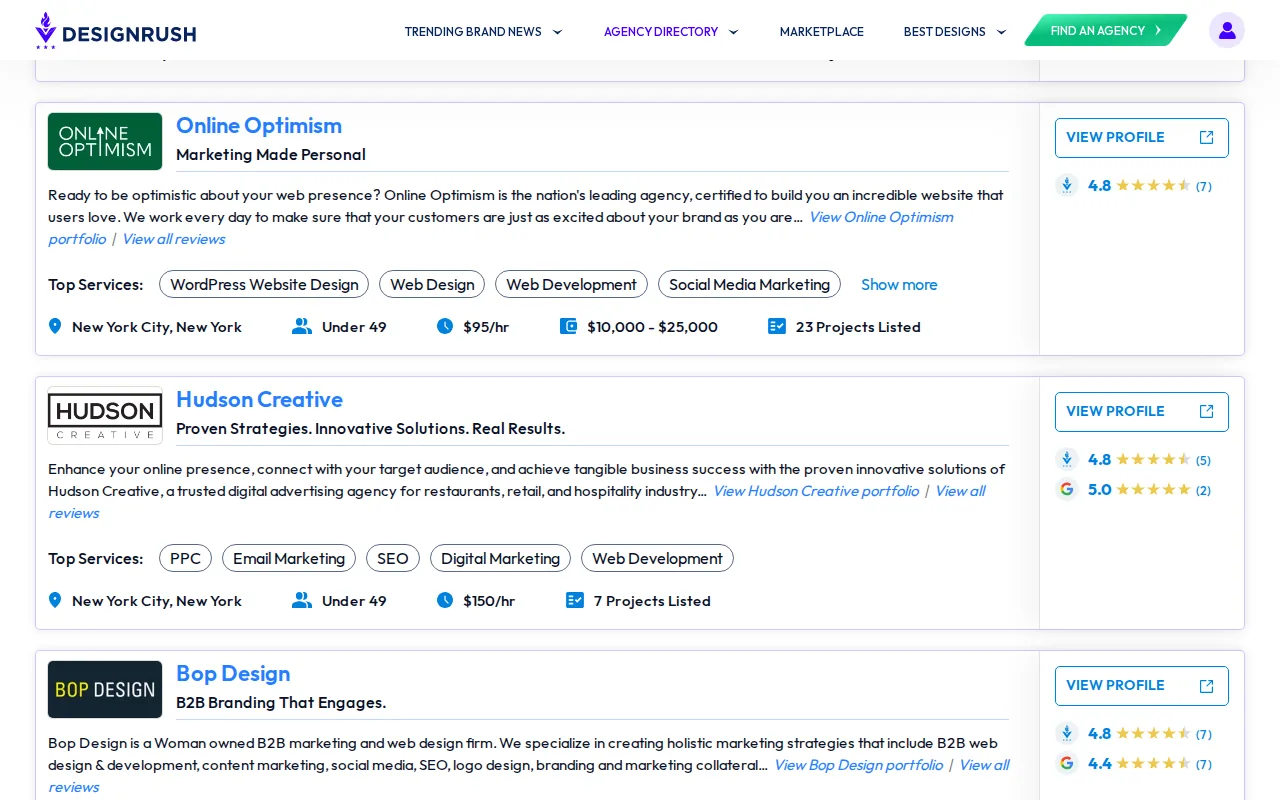
4. Hudson Creative , Hospitality‑focused SEO with citation management
Hudson Creative is a boutique agency that specializes in hospitality brands. Their local SEO playbook includes custom website redesigns, citation clean‑up, and a focus on brand storytelling.
The team builds location‑specific landing pages that weave neighborhood landmarks into the copy, a technique sometimes referred to as “street‑sign SEO.” They also run a review outreach program that encourages diners to leave Google reviews right after their meal.
Because they treat each restaurant as a brand, you get a visual identity that matches the SEO work. That can be a big boost for restaurants that want a cohesive look across their website, menu PDFs, and social media.
One limitation: Hudson works on a quarterly retainer, so you won’t have a true month‑to‑month subscription model. If you need the flexibility to pause during a slow season, you might look elsewhere.
5. Lounge Lizard Worldwide , Web design + SEO bundle for restaurants
Lounge Lizard pairs full‑stack web design with SEO audits. They build a fresh, mobile‑first site and then layer on local SEO tactics like schema, citation building, and GBP optimization.
The agency’s strength is its design expertise. If your current site looks dated, they’ll give you a visual overhaul that keeps visitors on the page longer, which indirectly helps rankings.
After the site launch, they set up a monthly SEO subscription that handles link building, content updates, and review management. That means you get a new look and ongoing growth without hiring two vendors.
The downside is pricing can be higher than pure‑play SEO firms because design work is bundled in. Small cafés on a tight budget might find the entry tier pricey.
6. RankWorks , Dedicated local SEO service with fast implementation
RankWorks focuses purely on local SEO for small‑to‑medium businesses. Their subscription includes GBP claim, NAP citation audits, on‑page tweaks, and a monthly backlink push.
What makes them fast is a proprietary audit tool that scans your existing listings and flags inconsistencies in seconds. The team then corrects those errors across the top 15 directories, which can lift your map‑pack visibility quickly.
They also create a custom “local landing page” for each service area, embedding the exact neighborhood names and landmarks you want Google to associate with.
A caution: RankWorks does not handle PPC or broader content marketing, so if you need a full digital mix you’ll have to add another provider.
7. The Digital Restaurant , AI‑powered insights for restaurant SEO
The Digital Restaurant offers a subscription that blends AI analytics with hands‑on SEO. Their platform scans your website, GBP, and review sentiment to surface quick wins.Features include automated review response suggestions, AI‑generated meta titles that include local landmarks, and a monthly performance dashboard that highlights “high‑value” keyword opportunities.
Because the AI layer learns from your existing content, it can suggest menu‑page tweaks that rank for dish‑specific queries like “vegan ramen near me.” That can pull in diners who search for a single item rather than a generic cuisine.
One limitation is that the AI engine still needs a human to approve changes before they go live, so you’ll see a slight lag compared to fully automated tools.
How to Choose the Right Subscription
Do you need a fully managed service that does everything? Look at Long Weekend or Thrive.
Do you already have a WordPress site and want a plugin? AIOSEO fits.
Is brand storytelling a priority? Hudson Creative excels.
Do you need a fresh website plus SEO? Lounge Lizard covers both.
Want fast citation fixes with a lean budget? RankWorks is built for that.
Prefer AI‑driven insights with human oversight? The Digital Restaurant delivers.
Key Takeaway: Match the subscription’s core strength to your biggest pain point, whether that’s technical SEO, design, or AI insights.
FAQ
What is a local SEO subscription?
A local SEO subscription is a monthly service where an agency handles ongoing optimization tasks like Google Business Profile management, citation cleanup, and content updates, so you don’t pay per project.
How much does a local SEO subscription cost for a single‑location restaurant?
Pricing varies depending on the depth of services; you’ll need a custom quote to know the exact amount.
Can I cancel my subscription if I’m not happy?
Yes, most agencies, including Long Weekend, offer flexible month‑to‑month contracts that let you pause or cancel with short notice.
Do these services help with Google reviews?
All of the listed providers include review monitoring and response strategies, because Google reviews are a top ranking factor for restaurant search results.
Is AI really useful for restaurant SEO?
AI can speed up keyword research, generate schema markup suggestions, and draft review responses, but you still need a human to fine‑tune the content for accuracy and brand voice.
Conclusion
If you want a hands‑off partner that covers every SEO angle, Long Weekend is the safest bet. Start a free trial today and see your reservations climb.
Looking for the right digital marketing agency for your business — one that drives measurable ROI? Long Weekend helps service businesses, SaaS, ecommerce brands and more — grow with expert SEO, AI Search, Google Ads (PPC) management, paid social ads, website design, and more.