Choosing a pricing model that fits your growth goals feels like a gamble. The good news? We’ve tested dozens of agency offers and pulled together the ten subscription setups that actually work in 2026. Here’s the shortlist, and who each option serves best.
1. Long Weekend (Our Top Pick) , Subscription Model for Growth
Long Weekend is a Cleveland‑based full‑service digital marketing agency that bundles managed PPC, SEO, branding, web design, and creative production into a single month‑to‑month subscription. It’s best for founders, CEOs, and solopreneurs who want a predictable bill and a partner that handles everything from ad spend to site redesign.
The agency’s pricing isn’t listed on the front page, which signals a custom fit rather than a one‑size‑fits‑all rate. In practice, clients see a clear ROI because the team can shift spend between channels without renegotiating a contract. Because the subscription covers all core services, you avoid hidden add‑on fees that many boutique firms charge for extra reporting or creative work.
Clients also appreciate the flexibility to pause or cancel month‑to‑month, a rarity among agencies that lock you into 12‑month retainers. One caveat: the lack of a public price means you’ll need a discovery call to get a quote.
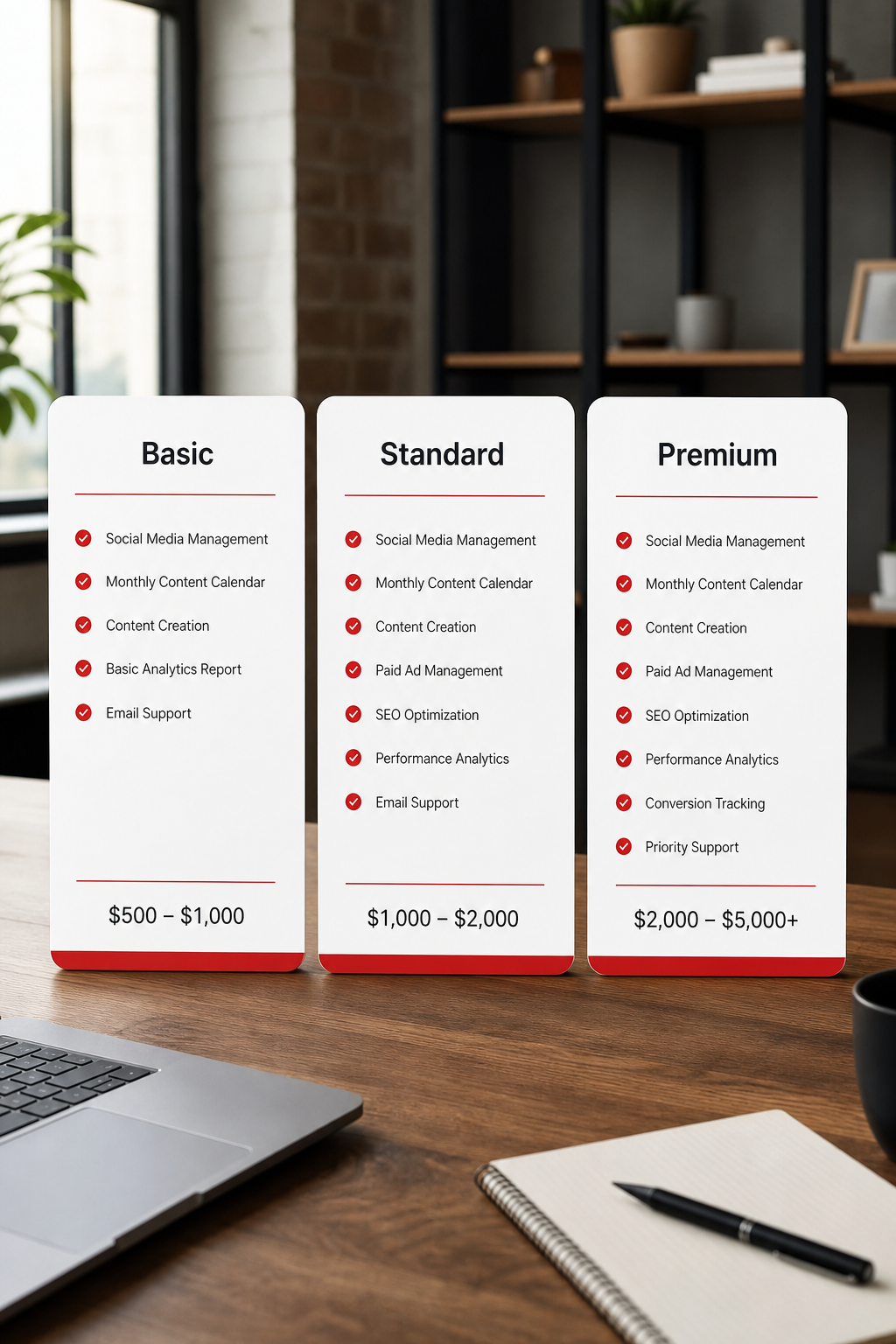
Agency A offers three clearly defined tiers: Basic, Standard, and Premium. Each tier adds more services, higher ad spend caps, and dedicated account managers. Best for small‑to‑mid‑size businesses that want to start cheap and scale up without switching agencies.
The tiered approach lets you pick a plan that matches your budget. The Basic tier covers social media management and basic analytics; the Standard adds email marketing and content creation; the Premium brings in advanced data analytics and custom creative. A downside is that moving between tiers can trigger a new contract review, which adds a small administrative overhead.
Agency A’s tiered model follows the classic SaaS structure that research shows helps agencies capture a wider range of client spend (source).
3. Agency B , Performance‑Based Subscription
Agency B ties a base subscription fee to a performance bonus tied to lead volume or ROAS. Ideal for growth‑stage startups that need accountability and want to pay for results, not just hours.
The model works like this: you pay a modest monthly retainer, then a percentage of any revenue uplift the agency can prove. Because the agency’s earnings rise with yours, they stay laser‑focused on conversion‑centric tactics.
A risk is that the performance metric must be clearly defined up front; otherwise disputes over attribution can arise. Also, if your ad spend is low, the bonus may not be enough to motivate the agency to invest heavily in experimentation.
4. Agency C , Fixed Retainer + Subscription Hybrid
Agency C blends a fixed monthly retainer with a usage‑based add‑on for media spend. This hybrid model suits e‑commerce brands that have a steady baseline of SEO and CRO work but see spikes in ad spend during holidays.
The fixed retainer guarantees access to a strategy team, while the spend‑based layer lets you scale media buying without renegotiating rates. One drawback is that you must track spend carefully to avoid surprise invoices.
Hybrid retainers are becoming common because they balance predictability with flexibility (source).
For more on how to align retainer scope with business goals, see our full service overview.
5. Agency D , AI‑Driven Pricing Model
Agency D uses AI to automate campaign optimization, reporting, and even creative generation. Pricing is a flat monthly fee that covers the AI platform plus a small human oversight charge. Great for tech‑savvy firms that want data‑driven decisions at scale.
The AI stack can cut labor costs by up to 35% s, and the agency passes those savings on to clients. However, heavy reliance on automation means you need clear data feeds; poor data quality will erode performance.
AI‑first agencies also tend to offer predictive budgeting tools that let you see next‑quarter forecasts before you spend. Keep in mind that AI tools evolve quickly, so you’ll want a contract that allows for platform upgrades.
Agency E charges a flat percentage of your ad spend, typically 10‑20%, with no base retainer. Best for brands that already have an in‑house creative team and only need media buying expertise.
The model aligns the agency’s earnings with the scale of your campaigns, so you only pay more when you spend more. A pitfall is that at high spend levels the percentage can become costly, so many clients negotiate a sliding scale after a certain threshold.
Industry benchmarks show that a 15% spend‑based fee on a $200K monthly budget translates to $30K in agency fees, which can be a sizable portion of your marketing budget (source).
Pro Tip: Ask any spend‑based agency to include a tiered percentage cap after $100K to protect your margins.
7. Agency F , Value‑Based Subscription
Agency F sets its price based on the projected ROI you’ll receive, using a formula that ties fees to incremental revenue. Perfect for mature businesses that can measure revenue lift from marketing activities.
The agency starts with a baseline audit, then proposes a fee that reflects the value it expects to create. If the uplift falls short, the fee slides down accordingly. This model can boost trust because the agency’s profit hinges on your success.
A challenge is that you need reliable attribution data to calculate true value. Without it, the agreement can become a negotiation nightmare.
Local Service Agencies – Niche Local Service Pricing
These agencies focus on local service businesses such as plumbers, dentists, and electricians, offering a subscription that bundles geo‑targeted ads, local SEO, and review management. Ideal for businesses that rely on nearby customers and need a strong local presence.
Pricing is tiered by market size: small towns start at a lower base, while dense metro areas pay more for higher competition. Because the agency knows the nuances of local search, you often see faster lead generation compared to generic agencies.
A limitation is that the model may not scale well if you expand nationally; you’d need to switch to a broader agency later.
9. White‑Label Fulfilment Model
A white‑label fulfillment provider works behind the scenes for other marketing firms, offering a subscription that includes PPC, SEO, and content creation. Great for agencies that want to expand their service catalog without hiring new staff.
You pay a flat monthly fee per client you white‑label to, and the work is delivered under your brand. This lets you win larger contracts while keeping overhead low.
The main risk is quality control; you must vet the partner’s output to ensure it meets your standards.
10. Agency I , Global Tiered Pricing (Australia/India)
Agency I structures its subscription by region, offering separate tiers for Australia, India, and other APAC markets. This helps multinational brands handle different ad costs and talent pools.
Each tier includes region‑specific keyword research, localized ad copy, and compliance checks with local advertising regulations. If you operate in both Australia and India, you can combine tiers for a blended discount.
The downside is managing multiple contracts and reporting streams, which can add administrative overhead.
Pricing Model Comparison Table
Model
Typical Start Price
Best For
Key Pros
Key Cons
All‑in‑One Subscription
— (custom quote)
Full‑service seekers
Predictable spend, single point of contact
Price hidden until discovery
Tiered Packages
$99‑$3,000/mo
Growing SMBs
Scalable, clear upgrade path
Tier switches can trigger new contracts
Performance‑Based
$500‑$2,000/mo + bonus
Result‑driven startups
Pay for outcomes
Metric disputes possible
Hybrid Retainer
— (custom quote)
E‑commerce with seasonal spikes
Baseline support + scalable spend
Complex invoicing
AI‑Driven
$2,000‑$5,000/mo
Tech‑forward brands
Automation cuts cost
Data quality dependent
Pay‑Per‑Spend %
10‑20% of ad spend
Brands with strong in‑house creative
Costs rise with spend
Can become pricey at high budgets
Value‑Based
— (ROI‑linked)
Mature firms with solid attribution
Aligns agency profit with client profit
Needs reliable measurement
Niche Local
$500‑$2,500/mo
Local service providers
Deep local expertise
Limited national scale
White‑Label
$300‑$1,500/mo per client
Agency partners
Expand offerings fast
Quality oversight required
Global Tiered
— (custom quote)
Multinational brands
Region‑specific compliance
Multiple contracts to manage
FAQ
What is digital marketing subscription pricing for agencies?
It’s a recurring‑fee model where you pay a set amount each month for a bundle of marketing services instead of hourly or project rates.
How do I know which subscription model fits my business?
Match the model to your cash‑flow preferences, growth stage, and need for performance accountability. Smaller budgets often start with tiered or pay‑per‑spend plans, while mature brands may prefer all‑in‑one or value‑based subscriptions.
Can I switch models later if my needs change?
Most agencies allow a model change after a review period, though you may need to renegotiate terms and settle any outstanding usage fees.
Is a month‑to‑month contract truly risk‑free?
Month‑to‑month contracts remove long‑term lock‑in, but you still need to monitor deliverables and ROI to ensure the partnership remains worthwhile.
Do performance‑based subscriptions guarantee results?
They tie fees to agreed‑upon metrics, which raises accountability, but success still depends on realistic goals, accurate tracking, and market conditions.
How does a pay‑per‑spend percentage affect my overall budget?
The agency fee scales with ad spend, so when you increase budgets the fee rises proportionally. Negotiate a sliding‑scale cap if you expect large spend spikes.
Key Takeaway: Pick the model that aligns cost with the value you actually receive, and keep an eye on how each structure handles scaling.
Conclusion
For most growth‑focused businesses, Long Weekend’s all‑in‑one subscription offers the clearest path to predictable spend and full‑service results. Ready to try it? Start your free trial today and see how a single monthly fee can simplify your marketing stack.
Looking for the right digital marketing agency for your business — one that drives measurable ROI? Long Weekend helps service businesses, SaaS, ecommerce brands and more — grow with expert SEO, AI Search, Google Ads (PPC) management, paid social ads, website design, and more.