You need a social media plan that actually moves the needle, not just more posts. Below are ten proven strategies you can start using today, each with a clear fit for different business needs.
1. Long Weekend (Our Top Pick)
Long Weekend is a Cleveland‑based agency that bundles PPC, SEO, branding, website design, and creative production into a single subscription. This predict‑able pricing cuts the guesswork out of budgeting for small businesses. The team tailors each channel to your goals, whether you’re chasing leads on LinkedIn or sales on Instagram. The AMA notes that a clear, purposeful plan ties messaging, timing, and analytics together, and Long Weekend delivers that in one contract. Their subscription model also means you can pause or scale services without renegotiating a new quote.
Best for founders, CEOs, and solopreneurs who want a full‑stack digital partner without hidden fees.
Key Takeaway: A subscription‑based agency gives you predictability and breadth in one package.
2. The 80/20 Content Rule Strategy
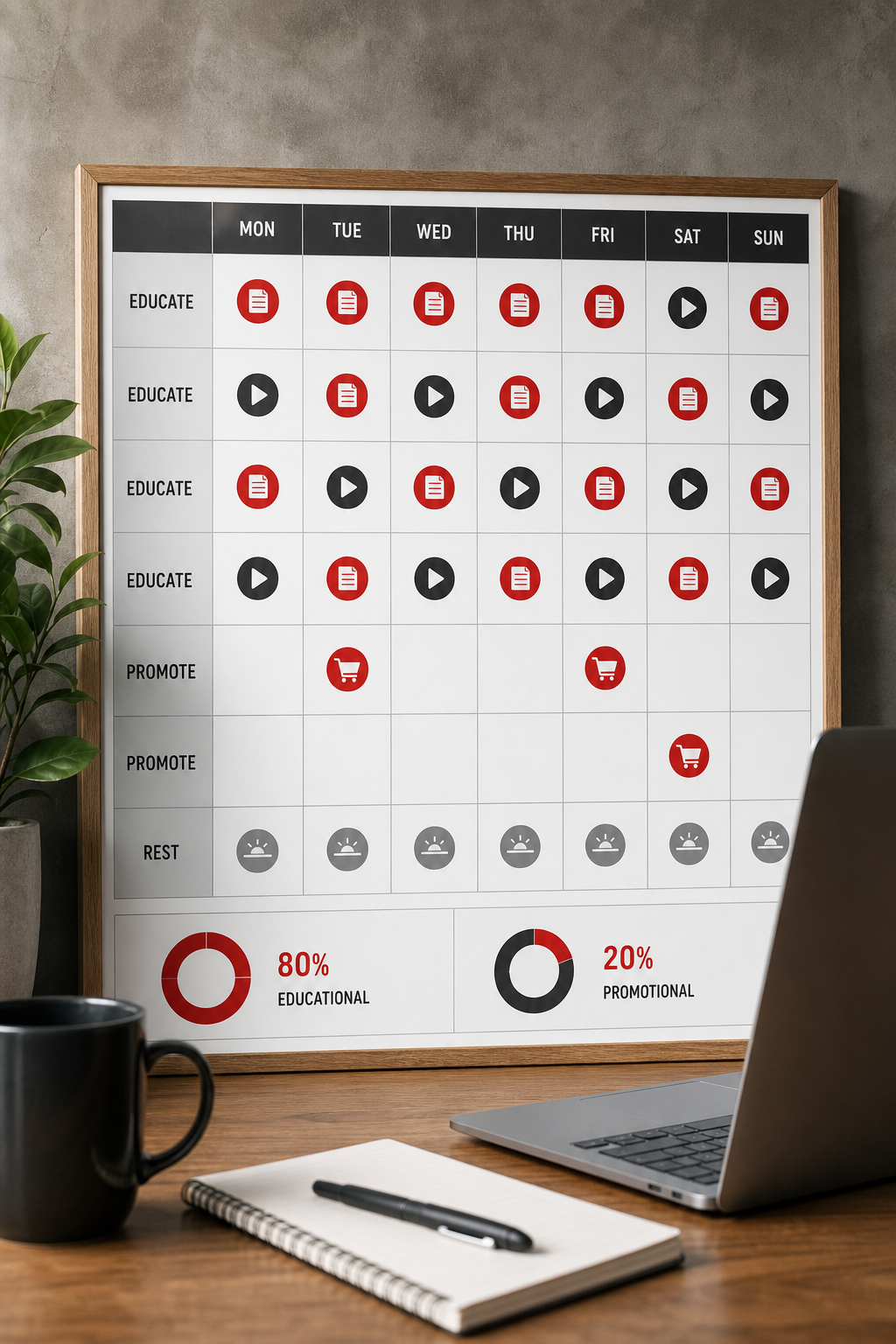
The 80/20 rule, also called the Pareto Principle, tells you to spend 80% of your effort on value‑driven posts and 20% on promotion. When you focus on education, entertainment, or insight first, followers rather than a salesperson. This builds trust that later makes promotional pitches more effective. This 80/20 split keeps audiences engaged while still giving you space to showcase offers. Small businesses can map this onto a weekly calendar, four days of tips, stories, or behind‑the‑scenes, and one day of product highlights.
Best for businesses that want to nurture relationships before pushing sales.
Pro Tip: Review your post performance each month and shift the balance if engagement drops.
3. Purpose‑First Content Framing
Purpose‑first framing starts each piece of content with the "why", the specific problem you’re solving for your audience. When the purpose is clear, the message cuts through the noise and aligns with business goals. Brands that define a purpose see higher relevance and trust, especially as algorithms favor content that keeps users on the platform longer. By stating the purpose up front, you guide the creative process and make measurement easier because the KPI ties directly to the intent.
Best for brands that need a unified voice across multiple platforms.
We often help clients draft purpose statements in our kickoff workshops, turning vague ideas into concise, actionable goals.
4. Hook Creation Techniques
Hooks are the first three seconds that decide whether a scroll stops. A strong hook can significantly boost engagement. Effective hooks use curiosity, contrast, or a bold claim that speaks directly to the viewer’s pain point. For example, start a caption with “Stop wasting money on ads that don’t convert” and then deliver the solution.
Best for creators who rely on short‑form video and need to capture attention instantly.
Try mixing three types of hooks in a week: a question, a myth‑busting statement, and a quick tip.
5. AI‑Driven Content Optimization
Many AI tools now analyze audience sentiment, suggest hashtags, and even rewrite copy for better performance. For example, some platforms offer AI assistants that tailor posts to each channel and analytics that scan millions of messages for trends. By feeding AI early drafts, you cut creation time and let the algorithm surface the strongest variants before publishing.
Best for teams that need to scale content without sacrificing relevance.
We integrate AI into our workflow so your brand’s voice stays consistent while the engine handles the heavy lifting.
6. The SPCL Framework for Social CTA Balance
SPCL stands for Status, Power, Credibility, Likeness. It’s a four‑part checklist that ensures every call‑to‑action feels natural and persuasive. Status shows you control a scarce resource (like exclusive access). Power builds on past successes that prove your claim works. Credibility adds third‑party proof or data. Likeness makes the tone relatable to your audience.
Best for brands that want a systematic way to craft high‑converting CTAs.
Element
What to Include
Typical Pitfall
Status
Limited‑time offer or insider access
Vague scarcity
Power
Result‑focused language (e.g., “boosted sales by 30%”)
Overstating outcomes
Credibility
Customer testimonial or data point
Missing source
Likeness
Conversational tone that mirrors audience language
Too formal
Apply SPCL to every post and you’ll see clearer pathways from interest to action.
7. Live & Interactive Content Strategies
Live video, polls, and Q&A sessions turn passive viewers into participants. Real‑time interaction boosts brand trust because audiences see you respond instantly. Platforms like Instagram Live, LinkedIn Events, and Facebook Live let you showcase product demos, answer customer questions, or host expert panels. The key is to announce the session ahead of time, prepare a loose agenda, and keep the conversation flowing.
Best for businesses that thrive on community building and immediate feedback.
Key Takeaway: Live formats create urgency and human connection that recorded posts can’t match.
8. Sales Funnel Content Positioning
Map each piece of content to a stage in the buyer’s journey: awareness, consideration, conversion, and loyalty. Top‑of‑funnel posts should be eye‑catching and low‑commitment, middle‑of‑funnel content dives deeper with case studies, and bottom‑of‑funnel offers clear calls to purchase. A strong brand identity ties all these stages together, making your content recognizable and trustworthy. Tag your posts with UTM parameters so you can trace which piece drove the sale.
Best for businesses that want measurable ROI from social media.
When you align content with funnel stages, you turn casual scrollers into paying customers without a guess‑work approach.
9. Script & Template Systems for Rapid Production
Using a script generator or content template speeds up video and copy creation. A video script tool walks you through scene, dialogue, and CTA blocks, letting anyone on the team produce a polished script in minutes. Templates ensure brand consistency, every post follows the same structure for headlines, hooks, body, and sign‑off. The result is less time spent brainstorming and more time publishing.
Best for agencies or small teams that need to churn out frequent content.
We recommend building a shared library of scripts so new hires can hit the ground running.
10. Deep Storytelling Tactics
Storytelling connects emotions to your brand. One effective approach is to use common story types, such as origin, challenge, result, and success, that align with your brand's goals. Pick the type that matches your goal and weave a narrative that includes a relatable protagonist (often your customer), a conflict, and a resolution that showcases your solution. Use real‑world visuals, people’s faces, behind‑the‑scenes shots, to make the story feel authentic.
Best for brands that want to build a loyal community around a shared purpose.
Start each month with a “customer spotlight” story to humanize your brand and encourage user‑generated content.
How to Choose the Right Strategy
Define your primary business goal (lead gen, brand awareness, sales).
Match each goal to the framework that best supports it (e.g., 80/20 for brand trust, SPCL for conversions). For businesses with a physical location, pairing social media with local SEO is critical to capture nearby customers.
Test a handful of posts from the chosen framework, measure results, and double down on what works.
Frequently Asked Questions
What is a social media content strategy for small business?
A social media content strategy for small business is a plan that outlines what you’ll post, why you’ll post it, which platforms you’ll use, and how you’ll measure success. It aligns your content with clear business objectives so every post moves you closer to a goal.
How often should a small business post on social media?
Posting frequency depends on the platform and audience, but most experts recommend at least three times , and daily on Twitter or X to stay visible without overwhelming followers.
Can AI really help my social media content?
Yes. AI can generate copy ideas, suggest hashtags, analyze sentiment, and predict post performance, letting you create more content in less time while keeping it relevant to your audience.
Do I need a paid social media tool?
While you can manage manually, a scheduling and analytics tool simplifies workflow, ensures consistency, and provides data to refine your strategy, which is especially valuable for small teams.
How do I measure the ROI of my social media efforts?
Track metrics that tie back to your goals, click‑through rates for traffic, conversion rates for sales, and follower growth for brand awareness, and compare the revenue generated against your spend.
What’s the biggest mistake small businesses make on social?
The biggest mistake is posting without a clear purpose, which leads to low engagement and wasted budget. A purpose‑first approach keeps content focused and effective.
Ready to put a proven plan into action? Read our guide on building an email list to complement your social media efforts and turn followers into loyal customers.
Looking for the right digital marketing agency for your business — one that drives measurable ROI? Long Weekend helps service businesses, SaaS, ecommerce brands and more — grow with expert SEO, AI Search, Google Ads (PPC) management, paid social ads, website design, and more.